Problem Statement
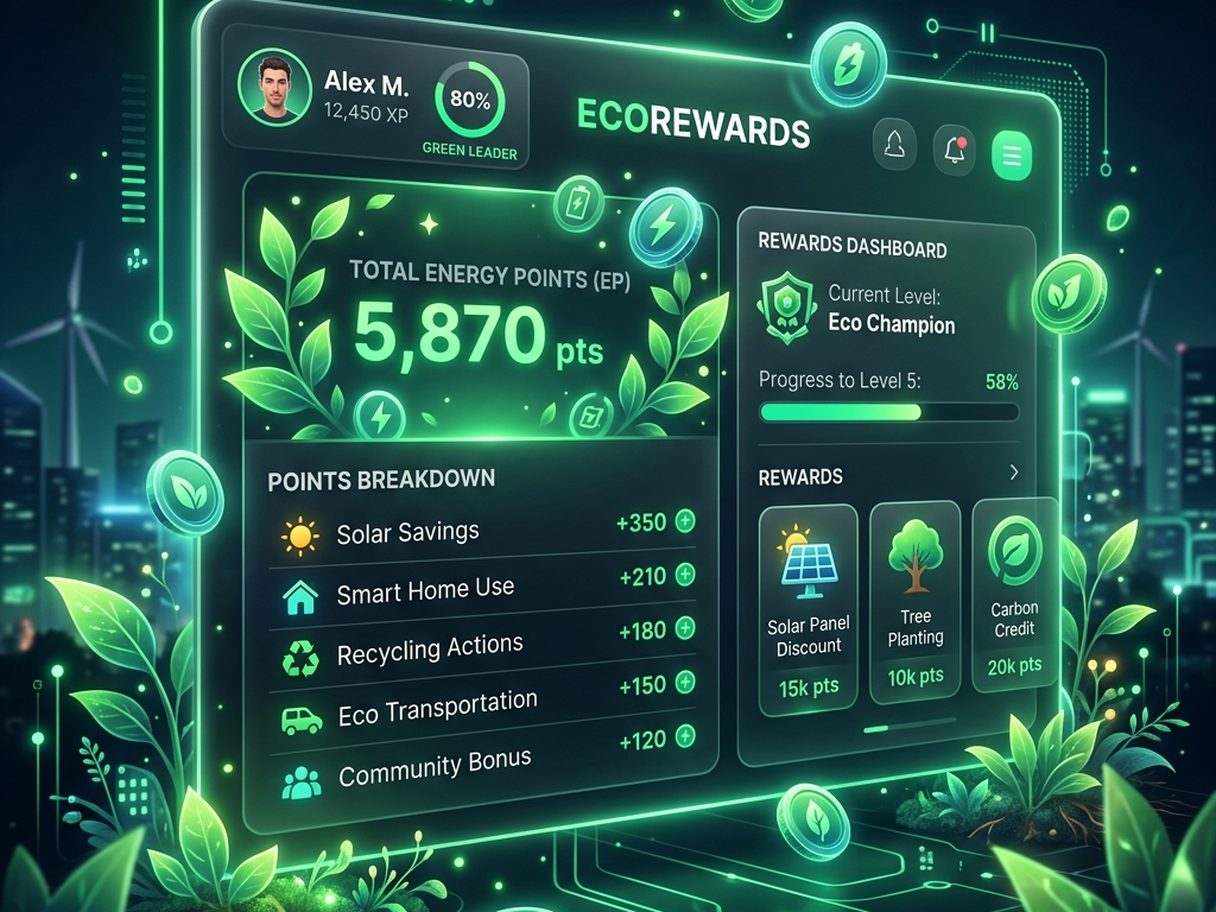
Environmental incentives and energy conservation programs too often devolve into corporate greenwashing, bureaucratic subsidy red-tape, or predatory Web3 schemes based on speculative tokens that crash and attract rent-seekers. Concurrently, citizens who tangibly curtail electricity consumption during peak grid stress hours (peak shaving), deploy balcony micro-solar panels, or volunteer manual labour in local maker labs have no transparent, tamper-proof mechanism to verify their real-world contribution. This sprout investigates a decentralized, non-financialized reputation protocol rooted in cryptographic transparency logs rather than speculative cryptocurrency tokens.
Open Hardware Bill of Materials (BOM Hints)
- Optical Smart Meter Read Head: 3D-printed magnetic optical probe equipped with an infrared phototransistor (SFH309) and IR emitter LED, built strictly to the physical IEC 62056-21 / IEC 61107 specification.
- Readout Microcontroller: Espressif ESP32-C3 featuring hardware UART and an open OBIS telegram parser running on ESPHome, enabling completely local meter parsing with zero cloud reliance.
- Secondary Lab Energy Meter: Eastron SDM120 Modbus-RTU or PZEM-004T v3.0 single-phase digital DIN-rail power meter coupled with a split-core current transformer (CT, 100A).
- Hardware Cryptographic Token: Hardware security key (Nitrokey 3, SoloKey, or on-board ATECC608A secure element) generating and protecting the node's Ed25519 device signing keys.
- Local SBC Node / Ledger: Ultra-low-power single-board computer (Raspberry Pi Zero 2W or similar) running an open append-only transparency log daemon powered by Merkle tree primitives (Trillian / RFC 6962 architecture).
Schematics & Experiment Notes
- OBIS Code Extraction from Smart Meters: The optical probe interrogates standard utility meters (such as Iskraemeco MT880 and Landis+Gyr) at 300 to 9600 baud, parsing official tariff registers: total active imported energy (1.8.0, 1.8.1, 1.8.2) and active exported solar energy (2.8.0).
- Cryptographic Proof of Curtailment: The local node models the household's baseline consumption. During grid peak-demand alert windows, verified reductions in active power ($P_{\text{saved}} = P_{\text{baseline}} - P_{\text{actual}}$) are cryptographically signed with the user's Ed25519 key and appended to the local Merkle log.
- Non-Transferable (Soulbound) Reputation: Reputation records are irrevocably bound to the participant's self-sovereign public key. They are not tradeable tokens, hold no financial market price, cannot be transferred or sold, and require zero blockchain transaction fees—eliminating financial speculation entirely.
- Physical Hacker-Lab Redemption Value: Verified points grant immediate access to shared community infrastructure: reserved machining hours on 3D printers and CNC mills, checkout privileges for high-end test instruments (FLIR thermal cameras, spectrum analyzers, Rigol digital oscilloscopes), and seats in advanced hardware workshops.
Call for Contribution (How to Join)
- Cryptographers & Backend Engineers: Help develop lightweight Rust / Go libraries for client-side cryptographic Merkle audit path verification on resource-constrained devices.
- Firmware Hackers: Expand our open repository of OBIS protocol parsers to support diverse multi-tariff smart meters deployed throughout the Balkan region.
- Makerspaces & Community Labs: Join our testbed federation to integrate automatic lab equipment checkout workflows driven by cryptographic green points.
Discussion
Discussion is not open yet.